This blog is long dead; I'm simply writing this post to promote Dino Dad Reviews! Check these posts if you're interested in dinosaur themed books for children.
Mammoth Is Mopey by David and Jennie Orr
Ultimate Dinopedia by "Dino Don" Lessem and illustrated by Franco Tempesta (& reviewed by Dr. Darren Naish!)
Jurassic Park Little Golden Book adapted by Arie Kaplan and illustrated by John Holtsclaw
Grand Canyon written and illustrated by Jason Chin
The Dinosaurs of Waterhouse Hawkins by Barbara Kerley and illustrated by Brian Selznick
Cruisin' the Fossil Coastline, Dr. Kirk Johnson and Ray Troll's sequel to their excellent Cruisin' the Fossil Freeway
ROAR: A Dinosaur Tour written and illustrated by Michael Paul
Pinnochio Rex by Melissa Stewart & Dr. Steve Brusatte, illustrated by Julius Csotonyi
The Nature Timeline Wallbook (and by default, its previous edition The Wallbook Timeline of Nature)
Random Silliness:
Dino Dad's Primeval Playlists
#ThanosTrying
Wednesday, November 28, 2018

Tuesday, July 7, 2015
Retired
Recently I've come to dislike the title of this blog. The original title, "Project Influenza", sounded like a band that a sullen teenager with a disturbingly comprehensive knowledge of gas masks would listen to. "Influenza Fortuna" wasn't much better, really, and the URL still kept the old name. For the record, I was referencing an obscure idea in a book nobody I know has read, so in hindsight, my attempt at literary cleverness pretty much crashed and burned.
With all that in mind, I have decided to start a new blog, with the much more descriptive and up-front title of Stuckasaurus. The name tells you everything you need to know: all lot of stuff about dinosaurs from yours truly. Thanks to those of you who have read this blog so far! I intend to keep posting creationist art at the new site, and hopefully expand my repertoire as well.
With all that in mind, I have decided to start a new blog, with the much more descriptive and up-front title of Stuckasaurus. The name tells you everything you need to know: all lot of stuff about dinosaurs from yours truly. Thanks to those of you who have read this blog so far! I intend to keep posting creationist art at the new site, and hopefully expand my repertoire as well.
Sunday, June 7, 2015
Agathaumas, or is it Regaliceratops?
So a cool new dinosaur was just recently announced: Regaliceratops, the "regal" part referring to the "crown-of-horns" on its frill. The internet of course can't stop talking about the fact that its discoverers nicknamed it "Hellboy". (Mike Mignola may or may not draw the original Hellboy riding one someday. We'll see!) But discussion of the creature itself is best left to the professionals. See this article by Brian Switek for more information.
My motivation for writing this blog post stems entirely from my realization that Regaliceratops looks a heck of a lot like a classic Charles Knight painting of Agathaumas from all the way back in 1897. Now the thing is, Agathaumas named on the basis of some pretty sparse remains (some scientists even debate whether it deserves its own name), so Charles Knight pretty much outright invented his interpretation of the beast, combining traits of Triceratops, Styracosaurus, and Monoclonius (another dubious genus). And wouldn't you know it, the *ahem* convergence in appearance is absolutely uncanny!
The only significant difference I see (correcting for changing trends in paleoart) is the thickness of the horns jutting from the frill. Pretty close if you ask me. Anyway, I don't have anything more profound to say, so that's all for now. Just spreading the word!
My motivation for writing this blog post stems entirely from my realization that Regaliceratops looks a heck of a lot like a classic Charles Knight painting of Agathaumas from all the way back in 1897. Now the thing is, Agathaumas named on the basis of some pretty sparse remains (some scientists even debate whether it deserves its own name), so Charles Knight pretty much outright invented his interpretation of the beast, combining traits of Triceratops, Styracosaurus, and Monoclonius (another dubious genus). And wouldn't you know it, the *ahem* convergence in appearance is absolutely uncanny!
 |
| Julius Csotonyi's Regaliceratops on left, Charles Knight's Agathaumas on right |
The only significant difference I see (correcting for changing trends in paleoart) is the thickness of the horns jutting from the frill. Pretty close if you ask me. Anyway, I don't have anything more profound to say, so that's all for now. Just spreading the word!
Wednesday, April 8, 2015
Brontosaurus is Back!
To the excitement of dinosaur fans everywhere, casual and professional, Brontosaurus is now officially a real dinosaur again! But first, a little celebratory music to set the mood.
It's common knowledge among people with a basic awareness of dinosaurs that Brontosaurus has long been considered what's known as a "junior synonym" of Apatosaurus for quite some time now, but what most people don't realize is that the name Brontosaurus has been sunk for over 100 years at this point! Such is the tenacious grasp that old Bronty has had on popular culture, and for good reason. "Brontosaurus" is one of those rare dinosaur names that just rolls off the tongue, and it's wonderfully evocative, meaning "Thunder Lizard", a truly appropriate name for this ponderous beast. (I'm personally disappointed we got stuck with "sauropod" instead of "brontosaur" as the family name for all long-necks. What the heck kinda name is "Lizard Foot", anyway? Sauropods have elephant feet! But I digress.) As noted on dino-blog Pseudoplocephalus, it's also nice not to have to be the killjoy nerd that's always butting in with "Well aaaactually, it's a sauropod."
So why, after 100 years, has Brontosaurus come thundering back to center stage? The culprits are Emmanuel Tschopp, Octavio Mateus, and Roger B. J. Benson, authors of a paper which reassesses the entirety of the diplodocid sauropod family. (For those of you who aren't as nerdy as I, diplodocids are the longest members of the long-neck family, but not the tallest or heaviest, titles that go instead to the macronarian sauropods, the group that includes the giraffe-like Brachiosaurus of Jurassic Park fame.) So, okay, a trio of scientists nostalgic for good old Bronty just slapped something together in a vain attempt to overturn 100 years of scientific consensus with Facebook worthy click-bait, right? Well, they're way ahead of you. Knowing their analysis might spark controversy, they examined every single known specimen of every known diplodocid species in the world, and hammered out a truly staggering 300 page paper that actually shakes up several branches of Brontosaurus' family tree.
So now Brontosaurus excelsus stands on its own apart from Apatosaurus ajax, but the authors also determine that the species Diplodocus hayi is unique enough from other Diplodocus specimens to stand in its own genus, Galeamopus. Lest you think they're simply splitting species to make a name for themselves, they also sink the Portuguese Dinheirosaurus into the American supergiant Supersaurus. The paper also questions a few more species, but largely leaves them to further review.
Know what's almost as awesome as a revived Brontosaurus? Open access science! Instead of publishing this momentous paper behind a paywall, the authors published their paper via PeerJ, an open access peer reviewed journal so that anyone in the world (yes, even you) can read their analysis, if so inclined. Any critic of their methods has the whole paper at their fingertips to pick apart (and frankly, no excuse not to respond in equal detail as the authors). In their "press release" interview on the PeerJ blog (which I recommend you read if a 300 page technical document sounds a little daunting to you), the authors specifically name-drop the dino-blog Sauropod Vertebra Picture of the Week as a key influence in their decision to publish in an open access journal. The guys at SV-POW are some of the most vocal advocates of open access research on the internet right now, so if you have any questions regarding the process and implications of publishing in this manner, they have a hefty back-catalog on the subject for you to peruse.
What an exciting time to be a dinosaur nerd! To see the revival of such a nostalgic dinosaur name, and to have it backed by such a rock-solid body of research! That's not to say that I don't expect any controversy from this, but that's the great thing about science: whenever you prove a specific scientific theory wrong, science as a whole just gets better!
If you'd like to know more about these developments, I highly recommend reading these articles I'm linking below. I've already linked to them in the body of my post, but just in case you missed them, here they are again. Each of these authors goes far more in-depth far more eloquently than I ever could.
PeerJ blog Interview with the authors:
The Brontosaurus is Back - Author interview
Sauropod Vertebra Picture of the Week:
Welcome back, Brontosaurus! And other first thoughts on Tschopp, et al. (2015)
Pseudoplocephalus
A Brontobyte of Sauropods
And of course, the original 300 page paper if you feel up to it!
(2015) A specimen-level phylogenetic analysis and taxonomic revision of Diplodocidae (Dinosauria, Sauropoda) PeerJ 3:e857
It's common knowledge among people with a basic awareness of dinosaurs that Brontosaurus has long been considered what's known as a "junior synonym" of Apatosaurus for quite some time now, but what most people don't realize is that the name Brontosaurus has been sunk for over 100 years at this point! Such is the tenacious grasp that old Bronty has had on popular culture, and for good reason. "Brontosaurus" is one of those rare dinosaur names that just rolls off the tongue, and it's wonderfully evocative, meaning "Thunder Lizard", a truly appropriate name for this ponderous beast. (I'm personally disappointed we got stuck with "sauropod" instead of "brontosaur" as the family name for all long-necks. What the heck kinda name is "Lizard Foot", anyway? Sauropods have elephant feet! But I digress.) As noted on dino-blog Pseudoplocephalus, it's also nice not to have to be the killjoy nerd that's always butting in with "Well aaaactually, it's a sauropod."
 |
| Brontosaurus, as depicted by the great Charles Knight |
So why, after 100 years, has Brontosaurus come thundering back to center stage? The culprits are Emmanuel Tschopp, Octavio Mateus, and Roger B. J. Benson, authors of a paper which reassesses the entirety of the diplodocid sauropod family. (For those of you who aren't as nerdy as I, diplodocids are the longest members of the long-neck family, but not the tallest or heaviest, titles that go instead to the macronarian sauropods, the group that includes the giraffe-like Brachiosaurus of Jurassic Park fame.) So, okay, a trio of scientists nostalgic for good old Bronty just slapped something together in a vain attempt to overturn 100 years of scientific consensus with Facebook worthy click-bait, right? Well, they're way ahead of you. Knowing their analysis might spark controversy, they examined every single known specimen of every known diplodocid species in the world, and hammered out a truly staggering 300 page paper that actually shakes up several branches of Brontosaurus' family tree.
 |
| A brief history of the genuses Apatosaurus and Brontosaurus. Image from Tschopp et al. (2015) |
So now Brontosaurus excelsus stands on its own apart from Apatosaurus ajax, but the authors also determine that the species Diplodocus hayi is unique enough from other Diplodocus specimens to stand in its own genus, Galeamopus. Lest you think they're simply splitting species to make a name for themselves, they also sink the Portuguese Dinheirosaurus into the American supergiant Supersaurus. The paper also questions a few more species, but largely leaves them to further review.
 |
| Authors Tschopp & Mateus measuring a sauropod femur. |
Know what's almost as awesome as a revived Brontosaurus? Open access science! Instead of publishing this momentous paper behind a paywall, the authors published their paper via PeerJ, an open access peer reviewed journal so that anyone in the world (yes, even you) can read their analysis, if so inclined. Any critic of their methods has the whole paper at their fingertips to pick apart (and frankly, no excuse not to respond in equal detail as the authors). In their "press release" interview on the PeerJ blog (which I recommend you read if a 300 page technical document sounds a little daunting to you), the authors specifically name-drop the dino-blog Sauropod Vertebra Picture of the Week as a key influence in their decision to publish in an open access journal. The guys at SV-POW are some of the most vocal advocates of open access research on the internet right now, so if you have any questions regarding the process and implications of publishing in this manner, they have a hefty back-catalog on the subject for you to peruse.
 |
| Brontosaurus as envisioned by modern science. Art by Davide Bonadonna. |
What an exciting time to be a dinosaur nerd! To see the revival of such a nostalgic dinosaur name, and to have it backed by such a rock-solid body of research! That's not to say that I don't expect any controversy from this, but that's the great thing about science: whenever you prove a specific scientific theory wrong, science as a whole just gets better!
If you'd like to know more about these developments, I highly recommend reading these articles I'm linking below. I've already linked to them in the body of my post, but just in case you missed them, here they are again. Each of these authors goes far more in-depth far more eloquently than I ever could.
PeerJ blog Interview with the authors:
The Brontosaurus is Back - Author interview
Sauropod Vertebra Picture of the Week:
Welcome back, Brontosaurus! And other first thoughts on Tschopp, et al. (2015)
Pseudoplocephalus
A Brontobyte of Sauropods
And of course, the original 300 page paper if you feel up to it!
(2015) A specimen-level phylogenetic analysis and taxonomic revision of Diplodocidae (Dinosauria, Sauropoda) PeerJ 3:e857
Thursday, February 12, 2015
Vintage Creationist Art: Noah's Ark and the Lost World
Long overdue, I've finally decided to get around to another Vintage Creationist Art post. I've kept to a chronological order thus far in my reviews of the books in my collection, a trend I might as well continue. So, for your viewing pleasure, I present to you 1988's Noah's Ark and the Lost World! (Note: more than half of this book documents attempts to find the remains of Noah's Ark on Mount Ararat, which I won't be examining here. Correspondingly, this post has less images than my last two reviews. I'd also like to remind my readers that I am only evaluating the artistic depictions of prehistoric creatures in this post, not critiquing the theories of creation or evolution.)
We get some good stuff right off the bat with the cover. The artist presents us with a scene from the eponymous lost world, with a man (presumably Noah?) surveying a small river flanked by a Brachiosaurus, an ornithomimid, a lion, a wooly mammoth, and a giant ground sloth. The art is heavily stylized, so there's not too much to nitpick about the accuracy of the animals' appearances in this one, other than the blatantly tail-dragging Brachiosaurus. (I think it also has a blowhole on top of its head.) That ornithomimid is pretty great, though! A nice, dynamic, modern posture lets us know that yes, the Dinosaur Renaissance was in fact taking place outside the creationist bubble. It of course has no feathers, but nobody was drawing feathers on them back then, so we'll give them a pass there. No complaints about the mammals in this picture: they're honestly kind of hard to screw up. That ground sloth reminds me of something though: I'm pretty sure I was first made aware of several less-charismatic (read: not wooly mammoths or saber-tooth tigers) Cenezoic mammals via this book. Always nice to see some lesser known prehistoric creatures get a little love once in a while, so kudos to the artist!
Here we have a seemingly idyllic landscape featuring a family of Trachodon and a Saber-Tooth Cat in the foreground, with some farmland and a walled city in the distance. The Saber-Tooth really looks like a proper Smilodon. Though we can't see if the artist gave it the correct bobbed tail or not, at least it's a more tawny color than anything resembling something explicitly tiger-ish. That's not to say that one can't paint a Smilodon with stripes, as long as one gives it an overall more bobcat-ish look than an explicitly tigerish one.
The Trachodons are another matter. Tail dragging clunkers, they look like they popped straight off the canvas of something from the 1950's. Actually, wait a sec, let's take a closer look at the one on the left... Holy goodness, it's a blatant copy-paste of Charles Knight!
Poor Chuck, always getting plagarized right and left. Oh well. As they say, if you're going to steal, steal from the best; and to the artist's credit, he does our dear duck-billed friend some justice at least. The overall piece certainly feels like something Mr. Knight would have painted had he been a young earth creationist. Ordinarily I'd say a favorable comparison to Mr. Knight would be high praise, but I don't know that brazen plagarization really counts. Also, points off for tripod dinosaurs in 1988.
One more point of interest before moving on. In the pasture in the distance, one can see a trio of shepherds chasing a flock of non-descript small bipedal dinosaurs away from their flock of sheep. The dinosaurs themselves are too far off to even tell whether they are carnivores or herbivores, to say nothing of what species they represent, though at least they are using their tails for balance, rather than scooting along in a tripod pose! And that my friends, is all you're going to get of the Dinosaur Renaissance in this book! Actually, even that is being rather generous, since smaller dinosaurs often escaped the tripod pose even in the pre-Renaissance era.

Our next piece portrays a sort of "before and after" of the Garden of Eden. On the left what assume is the Forbidden Tree we see Adam in a lush, peaceful, pre-Fall setting. On the right we see the post-Fall world, somewhat more barren, with evidence of carnivory plain to see, with bleached bones in the foreground and vultures at a carcass in the back. As for the dinosaurs, the pleased-looking Brachiosaurus poking his head in on the left doesn't provide us much to evaluate, though its head seems good enough. The eyes are in about in the right position, and while the nostrils are rather close to the jawline, they are at least position on the snout, rather than the dome of its head. Similarly, the Pteranodon and the sauropods on the right are a little too far off in the distance to say anything in particular about, though I note that the sauropods are dragging their tails.
However, off to the right, we have a more interesting pair of classic dino-tropes. My scanner ended up cutting off part of the Tyrannosaurus on the right, and even the original image only gives us a small portion of the front of its body. What we can see of the body strongly suggests a downward-sloping tail-dragging pre-Renaissance monster, possibly even inspired by the pot-bellied T-rex of Zallinger's Age of Reptiles mural. I wish there was more to see, but that's what we're left with for now. In contrast, we get a very nice view of Rexy's opponent, an adorably retro turtle-tank Ankylosaurus. Like most representations of this dinosaur throughout history, it has much shorter legs than the real thing, and very generic armor representative of no species in particular. I'm not sure where exactly this particular portrayal comes from, though it found widespread exposure with the Sinclair Dinoland exhibition at the 1964 New York World's Fair.
Next up we have a scene of daily life aboard Noah's Ark. One of Noah's daughters-in-law guards the feed from a pair of peckish pen-mates, while Noah shoes a horse. In the back, a sauropod of some sort (presumably a Diplodocus or Apatosaurus) snakes its neck into frame after the food, once again obscuring its body from our view. It has a decent skull for a diplodocid, with its nostrils in the correct place, but the teeth extend way too far back into the jaw. This species should only have them in the front of its mouth, as per the leaf-raking feeding strategy employed by its general family. It's a bit small, but the text theorizes that Noah would have only taken juvenile dinosaurs on the ark to save space, so the artist has a reason behind this portrayal.
Also reaching for the food, we have our diplodocid's partner-in-crime, a Wooly Mammoth. From what little we can see, its appearance seems generally correct, though its hair seems somewhat sparser than normally predicted. It could instead represent one of the less wooly varieties of mammoths, but considering it also seems somewhat under-sized, we can probably assume the artist means to represent a juvenile here as well.
Darting about the young woman's feet, conspicuously placed opposite a pair of chickens, is Mr. Chicken-Sized Dinosaur himself, Compsagnathus! In a very quintessentially pre-Renaissance pose, our Compy careens about with arms flailing in the air, attempting to compensate for the fact that although his tail remains lifted off the ground, he has thrown out his back in attempt to conform to a more retro appearance like a good little dinosaur from the awkward transition years of the 1980's.
We only get a single prehistoric critter in this next image: a glorious Brachiosaurus proudly surveying the countryside! Actually, he could use a little work. He's got a pretty gnarly head, with all sort of pockmarks that I assume the artist intended to represent the various fenestrae of the dinosaur's skull. The feet deserve particular attention as well. If you know any Latin, you know that "sauropod" means "lizard-foot", an odd name for a family of dinosaurs known primarily for their long necks. Nomenclatural peculiarities aside, this sauropod at least lives up to the family name, with very lizardy, practically dragon-like hands and claws. However, by this point in history, scientists had known for some time that sauropods had columnar, elephant-like hands, with the individual fingers completely invisible within the flesh. This makes the sauropod family name, and this particular image, all the more odd.
We end with a bang today on our final image, a rather psychedelic painting depicting animals boarding the ark past as ziggurat. The stylization is so heavy here that I'm not going to try to be at all comprehensive with this one. Blah blah, we already know the dinosaurs are inaccurately depicted as tail-draggers, etc. The only one I can't forgive is that ornithomimid on the right, behind the tarsier. The same artist depicted it with tail raised on the cover; the least we can ask for is a little consistency. Anyway, the more interesting points of this picture are moseying on the far left. Here we see a pair of trunked, giraffe-like Macrauchenia and a pair of rhino-like Arsinotherium, frustratingly unidentified anywhere in the text. I remember being blown away by the weirdness of the Macrauchenia, and getting really upset when I had no idea how to find out what the heck they were. Again, not too much to say on their accuracy, given the stylization. The horns on the Arsinotherium seem a little too small and cow-like, and the Macrauchenia look perhaps a little too much like ALF, but otherwise they seem decent enough compared to the other creatures in the painting.
Well, that all for this time. As I mentioned before, this book goes on much longer than I've detailed here, but the rest of it consists largely of photos documented real-life expeditions to find out whether Noah's Ark still rests on Mount Ararat. As I'm mainly concerned with the accuracy of the paleoart in these books, I nixed the Ark Expedition stuff in the interest of time. I hope you enjoyed the images, and I hope to review yet another book sometime soon!
 | ||
| Note the flashy title font. One guess which film franchise set the gold standard for adventure stories around this time. |
We get some good stuff right off the bat with the cover. The artist presents us with a scene from the eponymous lost world, with a man (presumably Noah?) surveying a small river flanked by a Brachiosaurus, an ornithomimid, a lion, a wooly mammoth, and a giant ground sloth. The art is heavily stylized, so there's not too much to nitpick about the accuracy of the animals' appearances in this one, other than the blatantly tail-dragging Brachiosaurus. (I think it also has a blowhole on top of its head.) That ornithomimid is pretty great, though! A nice, dynamic, modern posture lets us know that yes, the Dinosaur Renaissance was in fact taking place outside the creationist bubble. It of course has no feathers, but nobody was drawing feathers on them back then, so we'll give them a pass there. No complaints about the mammals in this picture: they're honestly kind of hard to screw up. That ground sloth reminds me of something though: I'm pretty sure I was first made aware of several less-charismatic (read: not wooly mammoths or saber-tooth tigers) Cenezoic mammals via this book. Always nice to see some lesser known prehistoric creatures get a little love once in a while, so kudos to the artist!
 |
| Shades of Charles Knight |
Here we have a seemingly idyllic landscape featuring a family of Trachodon and a Saber-Tooth Cat in the foreground, with some farmland and a walled city in the distance. The Saber-Tooth really looks like a proper Smilodon. Though we can't see if the artist gave it the correct bobbed tail or not, at least it's a more tawny color than anything resembling something explicitly tiger-ish. That's not to say that one can't paint a Smilodon with stripes, as long as one gives it an overall more bobcat-ish look than an explicitly tigerish one.
The Trachodons are another matter. Tail dragging clunkers, they look like they popped straight off the canvas of something from the 1950's. Actually, wait a sec, let's take a closer look at the one on the left... Holy goodness, it's a blatant copy-paste of Charles Knight!
 |
| Noah's Ark Illustration on the left, Trachodon by Charles R. Knight on the right |
One more point of interest before moving on. In the pasture in the distance, one can see a trio of shepherds chasing a flock of non-descript small bipedal dinosaurs away from their flock of sheep. The dinosaurs themselves are too far off to even tell whether they are carnivores or herbivores, to say nothing of what species they represent, though at least they are using their tails for balance, rather than scooting along in a tripod pose! And that my friends, is all you're going to get of the Dinosaur Renaissance in this book! Actually, even that is being rather generous, since smaller dinosaurs often escaped the tripod pose even in the pre-Renaissance era.
Our next piece portrays a sort of "before and after" of the Garden of Eden. On the left what assume is the Forbidden Tree we see Adam in a lush, peaceful, pre-Fall setting. On the right we see the post-Fall world, somewhat more barren, with evidence of carnivory plain to see, with bleached bones in the foreground and vultures at a carcass in the back. As for the dinosaurs, the pleased-looking Brachiosaurus poking his head in on the left doesn't provide us much to evaluate, though its head seems good enough. The eyes are in about in the right position, and while the nostrils are rather close to the jawline, they are at least position on the snout, rather than the dome of its head. Similarly, the Pteranodon and the sauropods on the right are a little too far off in the distance to say anything in particular about, though I note that the sauropods are dragging their tails.
However, off to the right, we have a more interesting pair of classic dino-tropes. My scanner ended up cutting off part of the Tyrannosaurus on the right, and even the original image only gives us a small portion of the front of its body. What we can see of the body strongly suggests a downward-sloping tail-dragging pre-Renaissance monster, possibly even inspired by the pot-bellied T-rex of Zallinger's Age of Reptiles mural. I wish there was more to see, but that's what we're left with for now. In contrast, we get a very nice view of Rexy's opponent, an adorably retro turtle-tank Ankylosaurus. Like most representations of this dinosaur throughout history, it has much shorter legs than the real thing, and very generic armor representative of no species in particular. I'm not sure where exactly this particular portrayal comes from, though it found widespread exposure with the Sinclair Dinoland exhibition at the 1964 New York World's Fair.
 |
| Aboard Noah's Ark |
Next up we have a scene of daily life aboard Noah's Ark. One of Noah's daughters-in-law guards the feed from a pair of peckish pen-mates, while Noah shoes a horse. In the back, a sauropod of some sort (presumably a Diplodocus or Apatosaurus) snakes its neck into frame after the food, once again obscuring its body from our view. It has a decent skull for a diplodocid, with its nostrils in the correct place, but the teeth extend way too far back into the jaw. This species should only have them in the front of its mouth, as per the leaf-raking feeding strategy employed by its general family. It's a bit small, but the text theorizes that Noah would have only taken juvenile dinosaurs on the ark to save space, so the artist has a reason behind this portrayal.
Also reaching for the food, we have our diplodocid's partner-in-crime, a Wooly Mammoth. From what little we can see, its appearance seems generally correct, though its hair seems somewhat sparser than normally predicted. It could instead represent one of the less wooly varieties of mammoths, but considering it also seems somewhat under-sized, we can probably assume the artist means to represent a juvenile here as well.
Darting about the young woman's feet, conspicuously placed opposite a pair of chickens, is Mr. Chicken-Sized Dinosaur himself, Compsagnathus! In a very quintessentially pre-Renaissance pose, our Compy careens about with arms flailing in the air, attempting to compensate for the fact that although his tail remains lifted off the ground, he has thrown out his back in attempt to conform to a more retro appearance like a good little dinosaur from the awkward transition years of the 1980's.
 |
| A monster-clawed Brachiosaurus |
We only get a single prehistoric critter in this next image: a glorious Brachiosaurus proudly surveying the countryside! Actually, he could use a little work. He's got a pretty gnarly head, with all sort of pockmarks that I assume the artist intended to represent the various fenestrae of the dinosaur's skull. The feet deserve particular attention as well. If you know any Latin, you know that "sauropod" means "lizard-foot", an odd name for a family of dinosaurs known primarily for their long necks. Nomenclatural peculiarities aside, this sauropod at least lives up to the family name, with very lizardy, practically dragon-like hands and claws. However, by this point in history, scientists had known for some time that sauropods had columnar, elephant-like hands, with the individual fingers completely invisible within the flesh. This makes the sauropod family name, and this particular image, all the more odd.
 |
| Groovy, man! |
We end with a bang today on our final image, a rather psychedelic painting depicting animals boarding the ark past as ziggurat. The stylization is so heavy here that I'm not going to try to be at all comprehensive with this one. Blah blah, we already know the dinosaurs are inaccurately depicted as tail-draggers, etc. The only one I can't forgive is that ornithomimid on the right, behind the tarsier. The same artist depicted it with tail raised on the cover; the least we can ask for is a little consistency. Anyway, the more interesting points of this picture are moseying on the far left. Here we see a pair of trunked, giraffe-like Macrauchenia and a pair of rhino-like Arsinotherium, frustratingly unidentified anywhere in the text. I remember being blown away by the weirdness of the Macrauchenia, and getting really upset when I had no idea how to find out what the heck they were. Again, not too much to say on their accuracy, given the stylization. The horns on the Arsinotherium seem a little too small and cow-like, and the Macrauchenia look perhaps a little too much like ALF, but otherwise they seem decent enough compared to the other creatures in the painting.
Well, that all for this time. As I mentioned before, this book goes on much longer than I've detailed here, but the rest of it consists largely of photos documented real-life expeditions to find out whether Noah's Ark still rests on Mount Ararat. As I'm mainly concerned with the accuracy of the paleoart in these books, I nixed the Ark Expedition stuff in the interest of time. I hope you enjoyed the images, and I hope to review yet another book sometime soon!
Wednesday, April 9, 2014
Vintage Creationist Dinosaur Art: The Great Dinosaur Mystery and the Bible (Part 2)
 |
| A bit of a reach, overall. |
This picture portrays the ancient Babylonian hero Gilgamesh in battle with the monster of the cedar forest, depicted here by a somewhat chimeric sauropod (never mind that the monster was originally a lion). It appears to have the head of a Brachiosaurus and the body of an Apatosaurus, both very different varieties of long-necks. Also of note, sauropods had much more rake-like teeth rather than the crushing molars depicted here. Contrary to many depictions, sauropods did not chew, but stripped leaves off branches to swallow them whole. The feet should look a bit like elephant feet, and would not have the great beastly claws this creature possesses, but as this feature did not commonly make it into artistic depictions of dinosaurs at the time, we can give them a pass on this one.
 |
| "THIS IS BABYLON!!!!" |
Not much to say about this one, other than Tanystropheus necks do not bend like that. I'm not even referring to the dragon fresco; I mean the more "accurate" painting below. Tanystropheus had one of the most ridiculously inflexible necks in the history of the planet. Seriously, go look at the skeleton: it only has ten neck vertebrae! I like that the artist gave it webbed feet though. This fits with the presumed aquatic nature of this reptile.

 |
| *SNAP* |
This one makes me nearly as angry as the dinosaur hip debacle from the first book I reviewed. That is NOT in any way whatsoever what Edmontosaurus looked like. At all. It's one thing to gather supporting evidence for your arguments; it's quite another to start shoehorning in made-up nonsense. Edmontosaurus is best known as the generic duck-billed dinosaur, not a T-rex-handed prosauropod mimicking a meerkat. In fact, why on earth didn't the artist go with a prosauropod, like Plateosaurus? It's a much better fit, and won't make people think you're intentionally misrepresenting the facts to them when you get called out on stuff like this. This is the kind of half-brained foolishness that drives people away, guys.
 |
| UGH. Moving on. |
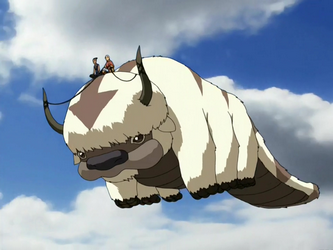
Here we have a decent-looking Triceratops which the text informs us portrays a dragon that was killed near Nerluc, France. I find this a highly dubious connection. I assume the text is referencing the story of the dragon Tarasque, which in traditional depictions looks more like Appa the Air Bison in a Koopa shell. I can't shake the feeling that the author did not want to draw attention to this fact, as he mentions the town of Nerluc changed its named in honor of the dragon, but neglects to mention either the dragon's or the town's modern name (Tarascon). The fact that Triceratops and its relatives are only found in North America and East Asia also deprives this connection of some credibility.
 |
| Not a terrible picture, though. |
I'm assuming this two-limbed creature is meant to represent a Tanystropheus, though who knows what it's doing so far from water. I'm guessing the illustrator was hoping the perspective would hide its lack of hindlimbs. The book lifts this picture from a (barely) animated scene in the accompanying film, hence the cardboard cutout appearance of the figure in this scene.
 |
| Egad! |
This scene has always stuck with me, I guess because I just found it to be sort of cool. I suppose there's a hint of Dinotopia in the idea of Chinese nobles using "dragons" (or dinosaurs) to pull their carriages. I'm not entirely sure what dinosaurs these are meant to be. Based on the body shape and skin texture, my first instinct is to say Scelidosaurus, but those spikes suggest otherwise. Possibly a Polocanthus pair? The anatomy seems a little mix-and-match, so it's hard to say.
 |
| Another chimerical sacrifice in the name of coolness. |
Here we have a rather pleasant image of a Rhamphorynchus flying near the pyramids. It's tastefully calm and peaceful, and the Rhamphorynchus is allowed to remain a part of its environment, rather than getting shoved up in your face. Overall, this feels like the sort of piece John Conway or maybe Douglas Henderson would produce if they were Young Earth Creationists (very high praise, if you don't know who they are. Check out their websites! You're in for a treat!).
 |
| That Rhamphorynchus looks reasonably accurate, to boot. |
Here we have a close-up of a Brachiosaurus heaed. It seems pretty decent: soft tissue seems to mitigate the extreme domed appearance of the skull, just as paleontologists believe it would have in life, though the nostrils fail to appear in their proper place in said tissue. We can give them a pass on this one, since again, paleoart conventions at this time usually placed the nostrils of Brachiosaurus directly on top of the dome. I'm not sure what's going on with its mouth; technically its lips seem to obscure the teeth, but there's a suggestion of large grinding molars rather than peg-like rakes.
 |
| I'm really nit-picking at this point, though. |
Here we have a very bored-looking Kronosaurus about to lazily munch down on a hapless plesiosaur. Not too much wrong with it, though perhaps the plesiosaur's head could use a little streamlining, and the Kronosaur's teeth should not go so far back down it jawline. The text refers to Kronosaurus as the possible identity of the Biblical Leviathan, which to my mind fits the bill much more closely than that flame-throwing Parasaurolophus from our last feature. This image had an inordinately strong impact on me as a child, given that it today seems rather bland and unexciting to me. However, back when this was my first introduction to the monster that was Kronosaurus, I simply gazed at this illustration in awe.
 |
| Not terrible, but not as good as it could be. |
That has to be the happiest little Saltopus ever! The beaming mother gladly receives a loving neck rub from... wait a minute, is that Nicholas Cage?!? I really think it might be. Was he a big deal at all when this book came out? He's got clothes on, so I don't think he's supposed to represent Adam... weird. Anyway, not much to say about Saltopus, other than it shows the age of this book (Saltopus was very common in 70's and 80's children's books, but has since receded from the limelight). I have no idea however what's going on with that... thing in the background there. It looks like the illustrator couldn't commit to drawing either a Plateosaurus or a... I don't know, Tsintaosaurus, maybe? In any case, it's yet another chimera, in this case of a prosauropod and some kind of hadrosaur, as best as I can tell.
 |
| Who Cage'd my dinosaur book? |
Okay, somebody must have a serious obsession with Disney, here. This exact image appears in no less than two places in the forgotten recesses of the Walt Disney Company (four, depending on how you look at it). First we have the Rite of Spring segment from Fantasia (1940). The overall segment represents a superb portrayal of dinosaurs as they were imagined at the time, but the limited scope of our interest at this point concerns the 4:53 mark in this clip. In the space of about 20 seconds we see two separate pairs of sauropods attempt to steal food from each other's mouths. Disney revisited this particular meme again in the dinosaur segment of "Ford's Magic Skyway", one of the four pavilions produced by Disney for the 1964 World's Fair. The animatronics used in this attraction were later re-used in the Primeval World show building on the Disneyland Railroad, and were reproduced for the Universe of Energy pavilion at Epcot. Ahem. So....... yeah. This artist totally copied Disney, is what I'm saying.
 |
| I think I may have read to much into this. Maybe I'M the one with the Disney obsession... |
Anyway, returning to more common dino-memes, here we have that old classic of the 70's and 80's, the Chunk-o-saurus Dilophosaurus! Dilophosaurus is best remembered as the spitter from Jurassic Park, and though there's no evidence of a fleshy neck frill, it was otherwise reasonably accurate, from a physical point of view. Now compare that svelte creature with these tubby lards, and you see the issue here. Nobody quite knows why this was such a common practice in older paleoart, but it probably represents the lazy attitude taken by many artists of the mid-twentieth century. And yes, they are eating plants, despite the fact that they are known to have been carnivores. This image intends to demonstrate how carnivorous animals were all originally peaceful herbivores in the Garden of Eden.
 |
| Don't even get me started on the one on the left... |
For our final dinosaur image from this book, we have that perennial favorite, Triceratops! It is here depicted using its horns to lift up a log to provide better foraging, rather than using them to gore the nearest Tyrannosaurus. A Rhinoceros Beetle, which uses its horn for similar purposes, helpfully stands nearby to further drive the point home (SEE WHAT I DID THERE?!?). I heartily approve of this portrayal. All apologizes to the Awesome-Bro fanboys out there, the natural world, present or past, does not consist of constant cage-fights to the death between evenly matched opponents. Even when carnivores go a-hunting, they tend to steer clear of well-armed opponents and pick on small, weak individuals that have little means of fighting back. Consequently, one finds that "defensive weapons" in the natural world usually serve multiple purposes other than simply fighting off enemies. Use as display structures in courtship represents one of the most common alternate uses, but foraging tools represent a perfectly reasonable utility for these features as well.
 |
| A Triceratops, depicted in the act of *GASP!* peacefully enjoying itself!!! |
Well, that all for now. The book had a few more images in it, but as they did not contain any prehistoric beasts, I felt they did not fall within the scope of our little examination here. Thanks for reading along, and for putting up with my ridiculous nit-picking!
Tuesday, February 11, 2014
Vintage Creationist Dinosaur Art: The Great Dinosaur Mystery and the Bible (Part 1)
Here we go again, with more old creationist dinosaur artwork! As I said in my previous blog post, this series aims to focus primarily on the accuracy of the creatures portrayed within the pages of these tomes, with maybe a bit of art criticism thrown in as well, to whatever extent I'm qualified to speak on the latter subject. I do NOT wish to delve into discussions of the merits of the overall worldviews of creation and evolution, though I likely won't be able to help commenting on the strength/accuracy of individual arguments. Let it also be known that I directly lifted the basic idea of "Vintage Dinosaur Art" from the wonderful paleoblog Love in the Time of Chasmosaurs.
This week, we have The Great Dinosaur Mystery and the Bible, released in 1987 (accompanied by a straight to VHS feature), a full decade after our last literary adventure. The sights have definitely improved, though there's still not much indication that the Dinosaur Renaissance was in full swing by this time. Case in point, this lovely illustration on the inside cover, featuring a swamp-bound, presumably tail-dragging sauropod that is almost certainly meant to be (the-by-then-long-defunct) Brontosaurus himself. Superb artwork, sloppy science.
On to the title page, whose artwork doubles as the cover illustration (I had to split it in two to fit the book in my tiny scanner). The artist (Todd Tennant) behind this illustration has a somewhat unique style I'm not otherwise familiar with, which pops up several times through this book. It's with Tennant's images that we also find the only hints of the Dinosaur Renaissance in this book, represented in this picture by that refreshingly well-rendered (if somewhat skeletal) Parasaurolophus, as well as the small theropod next to it. I'm not sure what it's supposed to be, though based on it's size, I'd guess some sort of ornithomimid. Speaking of size, if all the creatures in this image are meant to be full-grown, then that is a seriously MASSIVE elephant in the background. Just look at it! It's SUPPOSED to be about equal in height to the Parasaur, and only come up to about the shoulder on Mr. Smarmy Brachiosaurus there. Also the Brachiosaur's neck is attached to its shoulders strangely.
In this image we have a proud Stegosaurus parent with its three rather featureless babies. It's a cute scene, and a rather unique one I'm just now realizing. In fact, Stegosaurus seems to have an oddly lone-wolfish character ascribed to it in all the portrayals I can think of. One hardly ever sees it with other members of its own species, much less engaging in any parental activities. Perhaps this trend is a holdover from those classic days when it was considered almost too stupid to function, and such social activities imply a greater amount of intelligence than most artists are willing to afford our poor spiky friend. In any case, kudos to Tennant for breaking the mold, even if he still insists on portraying Steggy as a lumbering tail-dragger.
The next couple pages contain photographs of actual fossils, something I think children's books could use more of. (I'll skip it here since we're just evaluating the artwork.) It's nice to have them as a resource to get an idea of dinosaurs' true proportions, especially since artists can't always be trusted to do the most bang-up job on their own (whether with skeletal or flesh reconstructions), as we see on the very next page. I don't feel qualified to comment too much on the postcranial skeleton, other than to point out that there seems to be some sort of mystery structure blocking our view of the inside of the ribcage. I bring this up only to contrast it with the baffling abscess in the skull. The view presented to us has the viewer looking into the eye socket and clear through the rear end of the skull. Goodness knows where its brain was housed. Or what happened to the actual fenestrae. Or why it seems to have a duck-bill. Come on, Tennant, I was rooting for you! Also, the author attempts to recount the classic "wrong-headed Brontosaurus" story, but tells us the Brontosaurus was really a Diplodocus that scientists saddled with an Apatosaurus skull. Um, no? Come on dude, the last book got it right, and it was a decade older than this one!
Oh well. On to better stuff! I've always liked this page. It uses a handy visual example with a dog and a peacock to illustrate the difficulty an artist faces in fleshing out dried bones. In fact, when I first read All Yesterdays, I immediately thought back to this page. Author/artist John Conway manages to get an entire book out of this idea, representing alternate or extrapolated views of prehistoric creatures that run counter to traditional artistic takes on the subject, yet nevertheless remain clearly within the bounds of what we know about paleontology and modern zoology. (It's an awesome book, by the way! Go buy it.) Unfortunately, this book doesn't run with that idea in quite the same exciting way. This page's main function is to cast a reasonable doubt on the competency of mainstream paleontologists and their interpretations of the fossil record.
Here we have a creative (ahem) illustration of the concept of creation, showing all life springing forth from the Hand of God. We're here for dinosaurs, though, and I have no idea what's going on with that guy there. On the one hand, this represents our only other significant acknowledgement of the Dinosaur Renaissance, what with that high, balancing tail and all. On the other hand, I can't tell whether it's meant to represent a really skinny Corythosaurus or a burly, beakless Oviraptor, though I'd probably choose the latter if I was forced to. It doesn't really look like much of anything at all.
I've always liked this "Behemoth" illustration, even if the creature is represented as a hopelessly outdated old Brontosaurus. One can't ignore the artistic quality however, and the nearby elephant and hippo (just out of frame) really help to emphasize its massive bulk.

In this illustration, apparently depicting a scene in the Garden of Eden, we have Mr. Manly-Chin Adam interacting with what appears to be a young Tsintaosaurus. The original specimen had only a fragmentary remnant of its crest, and so popular artistic convention restored it with the unicorn-like spike depicted here. Recent evidence has revealed that it had a much more traditionally respectable crest like its relatives in life. Fun fact: many artists gave Tsintaosaurus a pair of inflatable air sacs just below its horn (to compensate for the supposed lack of a chambered crest), with hilariously Freudian results.
I must commend the illustrator for the quality of this Triceratops skeleton, especially after that earlier skeletal nonsense. A small lizard gazes forlornly just off screen at its deceased cousin, haven apparently fallen victim to the great extinction event that killed off the rest of the dinosaurs.
Exinction Event!!! A generic sauropod and a somewhat Renaissance-y Iguanodon gasp in terror at the sight of their impending doom. Noah's Flood barrels down upon them in the form of an enormous tidal (which also sweeps up their human neighbors), while a volcano Rudolph Zallinger would consider excessive explodes in the background with the force of a gun.

Just in case it wasn't clear, we have come to the "What happened to the dinosaurs?" section that every dinosaur book is required by unspoken law to feature. The answer in this book, of course, lies in Noah's Flood. In this image, a dinosaur left outside the ark drowns in the roiling waves. It's a very non-descript theropod, and rather derpy looking no matter what species you try to assign it to. I'm assuming it's meant to represent a T-rex, in which case the most obvious things I can point out are its too-pointed snout and its too-wide bottom jaw.
This illustration of animals entering the ark illustrates the idea that Noah would have taken at least some dinosaurs on the ark (since God commanded him to take two of every living creature), but to save space, he most likely only brought juveniles. The sauropods in the picture look fine, although their tails seem a bit draggy, and while I meant to critique those pterodactyls, the artist represents them abstractly enough that it seems unfair to do so.

So if Noah took dinosaurs on the ark, where happened to them? Why the Ice Age, of course! Or rather, dramatic climate shifts including but not limited to the Ice Age. In this image, a mammoth lies dead from unknown causes. It's not a bad illustration, except for the fact that its tusks should point towards rather than away from each other.

The film accompanying this book told a story about some Native Americans who saw a pterosaur struck by lightning, then later coming across the skeleton. This supposedly represents the origin of the Thunderbird myth, though I'm not sure where they got this story from. The film used this image to illustrate the final part of that tale, showing a Pteranodon skeleton apparently freshly picked clean by vultures. It's actually a reasonably good-looking skeleton. As best as I can tell from the semi-disarticuated features, the wing anatomy all appears present in their proper arrangement. I think even see a pteroid bone in there! The skull also appears pretty accurate, with the fenestrae in their proper positions. The torso is a little too jumbled to really say much about it one way or the other.
This only gets us halfway through the book, but I think I'm going to stop here for now. I'm putting quite a lot of images up, and don't want to make this page too hard to load. Thanks for reading so far! Keep an eye out soon for Part 2, in which we examine dragon legends and their possible connections to dinosaurs!
This week, we have The Great Dinosaur Mystery and the Bible, released in 1987 (accompanied by a straight to VHS feature), a full decade after our last literary adventure. The sights have definitely improved, though there's still not much indication that the Dinosaur Renaissance was in full swing by this time. Case in point, this lovely illustration on the inside cover, featuring a swamp-bound, presumably tail-dragging sauropod that is almost certainly meant to be (the-by-then-long-defunct) Brontosaurus himself. Superb artwork, sloppy science.
 |
| I don't think it would look to out of place next to a classic Charles Knight piece, or maybe a Burian. |
On to the title page, whose artwork doubles as the cover illustration (I had to split it in two to fit the book in my tiny scanner). The artist (Todd Tennant) behind this illustration has a somewhat unique style I'm not otherwise familiar with, which pops up several times through this book. It's with Tennant's images that we also find the only hints of the Dinosaur Renaissance in this book, represented in this picture by that refreshingly well-rendered (if somewhat skeletal) Parasaurolophus, as well as the small theropod next to it. I'm not sure what it's supposed to be, though based on it's size, I'd guess some sort of ornithomimid. Speaking of size, if all the creatures in this image are meant to be full-grown, then that is a seriously MASSIVE elephant in the background. Just look at it! It's SUPPOSED to be about equal in height to the Parasaur, and only come up to about the shoulder on Mr. Smarmy Brachiosaurus there. Also the Brachiosaur's neck is attached to its shoulders strangely.
 |
| The ibis and marhor are quite excellent, however. |
 |
| That Parasaur has a vague similarity to William Stout's style. |
In this image we have a proud Stegosaurus parent with its three rather featureless babies. It's a cute scene, and a rather unique one I'm just now realizing. In fact, Stegosaurus seems to have an oddly lone-wolfish character ascribed to it in all the portrayals I can think of. One hardly ever sees it with other members of its own species, much less engaging in any parental activities. Perhaps this trend is a holdover from those classic days when it was considered almost too stupid to function, and such social activities imply a greater amount of intelligence than most artists are willing to afford our poor spiky friend. In any case, kudos to Tennant for breaking the mold, even if he still insists on portraying Steggy as a lumbering tail-dragger.
 |
| "LOL, whut? Parenting? You must have me confused for Maiasaura." |
The next couple pages contain photographs of actual fossils, something I think children's books could use more of. (I'll skip it here since we're just evaluating the artwork.) It's nice to have them as a resource to get an idea of dinosaurs' true proportions, especially since artists can't always be trusted to do the most bang-up job on their own (whether with skeletal or flesh reconstructions), as we see on the very next page. I don't feel qualified to comment too much on the postcranial skeleton, other than to point out that there seems to be some sort of mystery structure blocking our view of the inside of the ribcage. I bring this up only to contrast it with the baffling abscess in the skull. The view presented to us has the viewer looking into the eye socket and clear through the rear end of the skull. Goodness knows where its brain was housed. Or what happened to the actual fenestrae. Or why it seems to have a duck-bill. Come on, Tennant, I was rooting for you! Also, the author attempts to recount the classic "wrong-headed Brontosaurus" story, but tells us the Brontosaurus was really a Diplodocus that scientists saddled with an Apatosaurus skull. Um, no? Come on dude, the last book got it right, and it was a decade older than this one!
 |
| Drawing skeletons is, like, hard you guys. |
Oh well. On to better stuff! I've always liked this page. It uses a handy visual example with a dog and a peacock to illustrate the difficulty an artist faces in fleshing out dried bones. In fact, when I first read All Yesterdays, I immediately thought back to this page. Author/artist John Conway manages to get an entire book out of this idea, representing alternate or extrapolated views of prehistoric creatures that run counter to traditional artistic takes on the subject, yet nevertheless remain clearly within the bounds of what we know about paleontology and modern zoology. (It's an awesome book, by the way! Go buy it.) Unfortunately, this book doesn't run with that idea in quite the same exciting way. This page's main function is to cast a reasonable doubt on the competency of mainstream paleontologists and their interpretations of the fossil record.
 |
| Still, the reality check is welcome anyway. |
 |
| "He's got the whooooole, world..." |
I've always liked this "Behemoth" illustration, even if the creature is represented as a hopelessly outdated old Brontosaurus. One can't ignore the artistic quality however, and the nearby elephant and hippo (just out of frame) really help to emphasize its massive bulk.
In this illustration, apparently depicting a scene in the Garden of Eden, we have Mr. Manly-Chin Adam interacting with what appears to be a young Tsintaosaurus. The original specimen had only a fragmentary remnant of its crest, and so popular artistic convention restored it with the unicorn-like spike depicted here. Recent evidence has revealed that it had a much more traditionally respectable crest like its relatives in life. Fun fact: many artists gave Tsintaosaurus a pair of inflatable air sacs just below its horn (to compensate for the supposed lack of a chambered crest), with hilariously Freudian results.
 |
| Is it just me, or does Adam really look like 1930's Tarzan here? |
I must commend the illustrator for the quality of this Triceratops skeleton, especially after that earlier skeletal nonsense. A small lizard gazes forlornly just off screen at its deceased cousin, haven apparently fallen victim to the great extinction event that killed off the rest of the dinosaurs.
 |
| I want to say it's T. horridus rather than T. prorsus, but I don't know enough to be sure. |
Exinction Event!!! A generic sauropod and a somewhat Renaissance-y Iguanodon gasp in terror at the sight of their impending doom. Noah's Flood barrels down upon them in the form of an enormous tidal (which also sweeps up their human neighbors), while a volcano Rudolph Zallinger would consider excessive explodes in the background with the force of a gun.
Just in case it wasn't clear, we have come to the "What happened to the dinosaurs?" section that every dinosaur book is required by unspoken law to feature. The answer in this book, of course, lies in Noah's Flood. In this image, a dinosaur left outside the ark drowns in the roiling waves. It's a very non-descript theropod, and rather derpy looking no matter what species you try to assign it to. I'm assuming it's meant to represent a T-rex, in which case the most obvious things I can point out are its too-pointed snout and its too-wide bottom jaw.
 |
| "Eh, good enough." |
This illustration of animals entering the ark illustrates the idea that Noah would have taken at least some dinosaurs on the ark (since God commanded him to take two of every living creature), but to save space, he most likely only brought juveniles. The sauropods in the picture look fine, although their tails seem a bit draggy, and while I meant to critique those pterodactyls, the artist represents them abstractly enough that it seems unfair to do so.
So if Noah took dinosaurs on the ark, where happened to them? Why the Ice Age, of course! Or rather, dramatic climate shifts including but not limited to the Ice Age. In this image, a mammoth lies dead from unknown causes. It's not a bad illustration, except for the fact that its tusks should point towards rather than away from each other.
The film accompanying this book told a story about some Native Americans who saw a pterosaur struck by lightning, then later coming across the skeleton. This supposedly represents the origin of the Thunderbird myth, though I'm not sure where they got this story from. The film used this image to illustrate the final part of that tale, showing a Pteranodon skeleton apparently freshly picked clean by vultures. It's actually a reasonably good-looking skeleton. As best as I can tell from the semi-disarticuated features, the wing anatomy all appears present in their proper arrangement. I think even see a pteroid bone in there! The skull also appears pretty accurate, with the fenestrae in their proper positions. The torso is a little too jumbled to really say much about it one way or the other.
 |
| You should also buy Mark Witton's Pterosaurs. I used it to reference for the Pteranodon skeleton. |
Subscribe to:
Posts (Atom)